
The Multi-Functional Furniture Matrix
A plain way to choose furniture that genuinely does two jobs, learned after buying pieces that did neither well.
Updated December 1, 2026
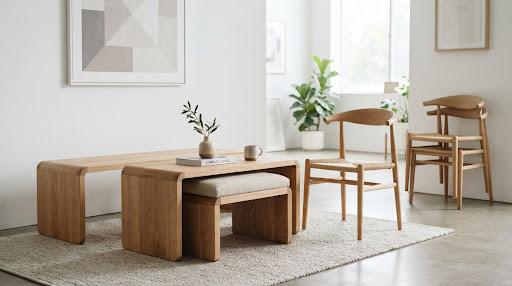
I bought the wrong multi-functional piece first
It was a coffee table that turned into a dining table. It looked clever in the shop. At home it was heavy, it scratched the floor, and lifting it took two people and a lot of swearing.
The problem was not the idea. It was that I had bought a transformation instead of a habit.
Ask what you actually do on a Tuesday
Before you buy anything that does two jobs, write down the two jobs in the order you do them. Mine were: work at a laptop in the morning, eat dinner at the same spot in the evening.
Once I wrote that down, the answer was obvious. I needed a desk that could be cleared in thirty seconds. I did not need a table that unfolded into a small banquet.
The thirty-second rule
If clearing a surface takes longer than thirty seconds, I will not do it on a weekday. I have tested this on myself many times. I am not a patient person at 7 a.m.
The current setup is a wall desk with one shallow drawer. The laptop closes, the notebook goes in the drawer, and the surface is a table again.
Count the moves, not the functions
A piece that changes from sofa to bed in four steps will stay a sofa. A piece that changes in one move gets used.
I now count the physical moves between states. One move is good. Two is acceptable. Anything that needs me to lift, unlock and rotate at the same time is a piece of furniture I will never use as intended.
My one-move winners
- A bench with a lid: the lid is the whole transformation.
- A drop-leaf table: lift the leaf, prop it, done.
- A storage ottoman: take the top off, put the blanket in.
None of these are beautiful in a catalogue way. All of them get used every week.
Check the footprint in both states
This is the bit that catches people out. A fold-out desk may be slim when closed and huge when open. If the open state blocks the only path to the kitchen, you will keep it closed forever.
I measure the open state with masking tape on the floor and live with it for a day. Tape is cheaper than a return.
What I would skip now
I would skip any piece whose main selling point is that it replaces three other pieces. In my experience it replaces none of them well and adds a fourth thing to store.
One job done properly, plus one easy extra, is plenty. Everything beyond that is a demonstration, not a solution.